Guide
Custom Metalwork for Casino and Integrated Resort Interiors
Casino interiors combine 24/7 operation, phased shutdowns and demanding finish approvals. What custom metalwork suppliers must get right, from Macau project experience.
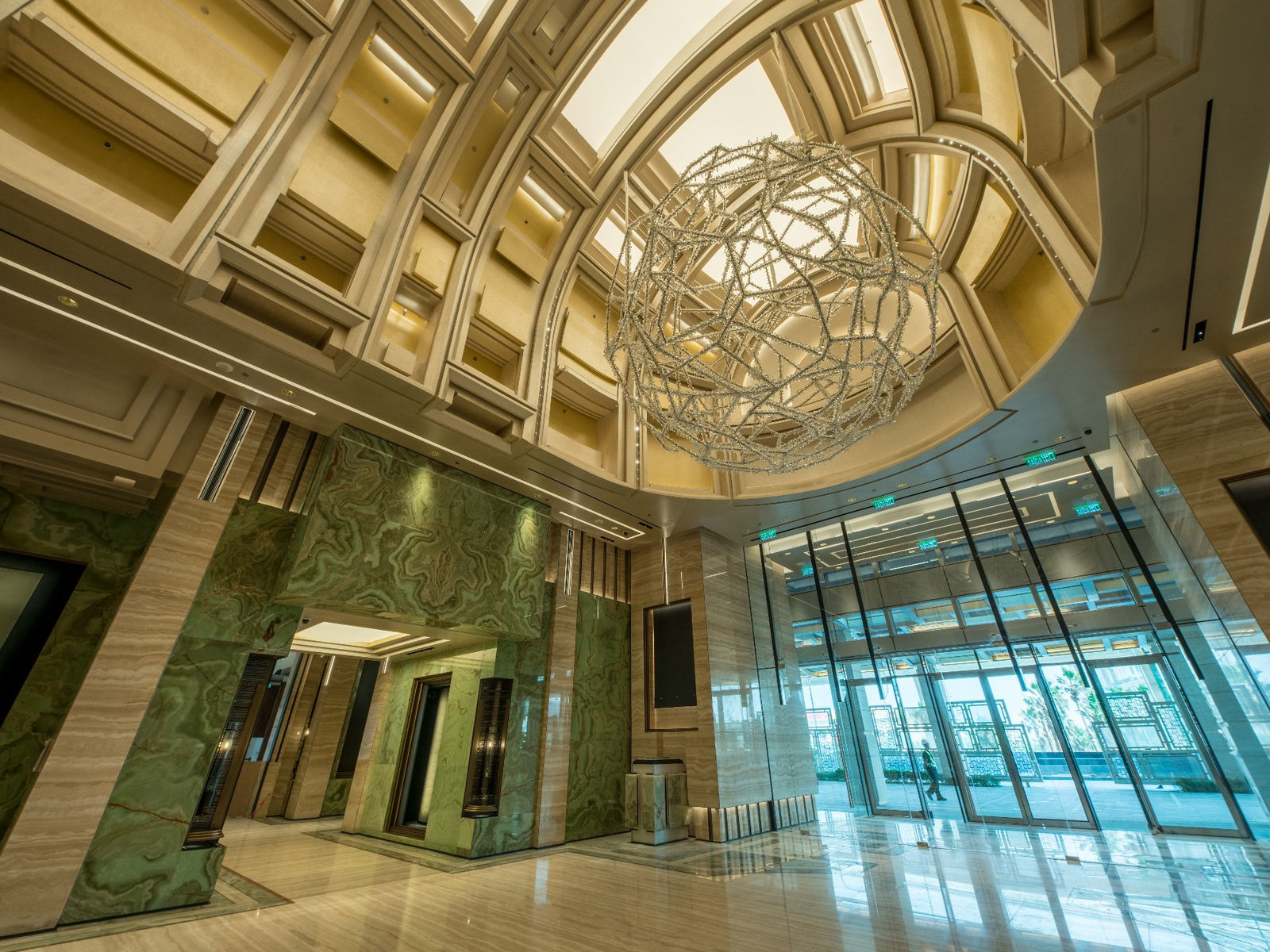
Casino interiors are the hardest test a metalwork package can face
Casino and integrated resort projects sit at the extreme end of commercial fit-out: the operating day is 24 hours, the finish standard is luxury-hospitality-plus, the approval chain runs through operators, designers and project managers, and the work is executed in a live building where shutdown windows are negotiated, not given. A metalwork package that behaves well in this environment has been engineered for a level of discipline most commercial projects never demand.
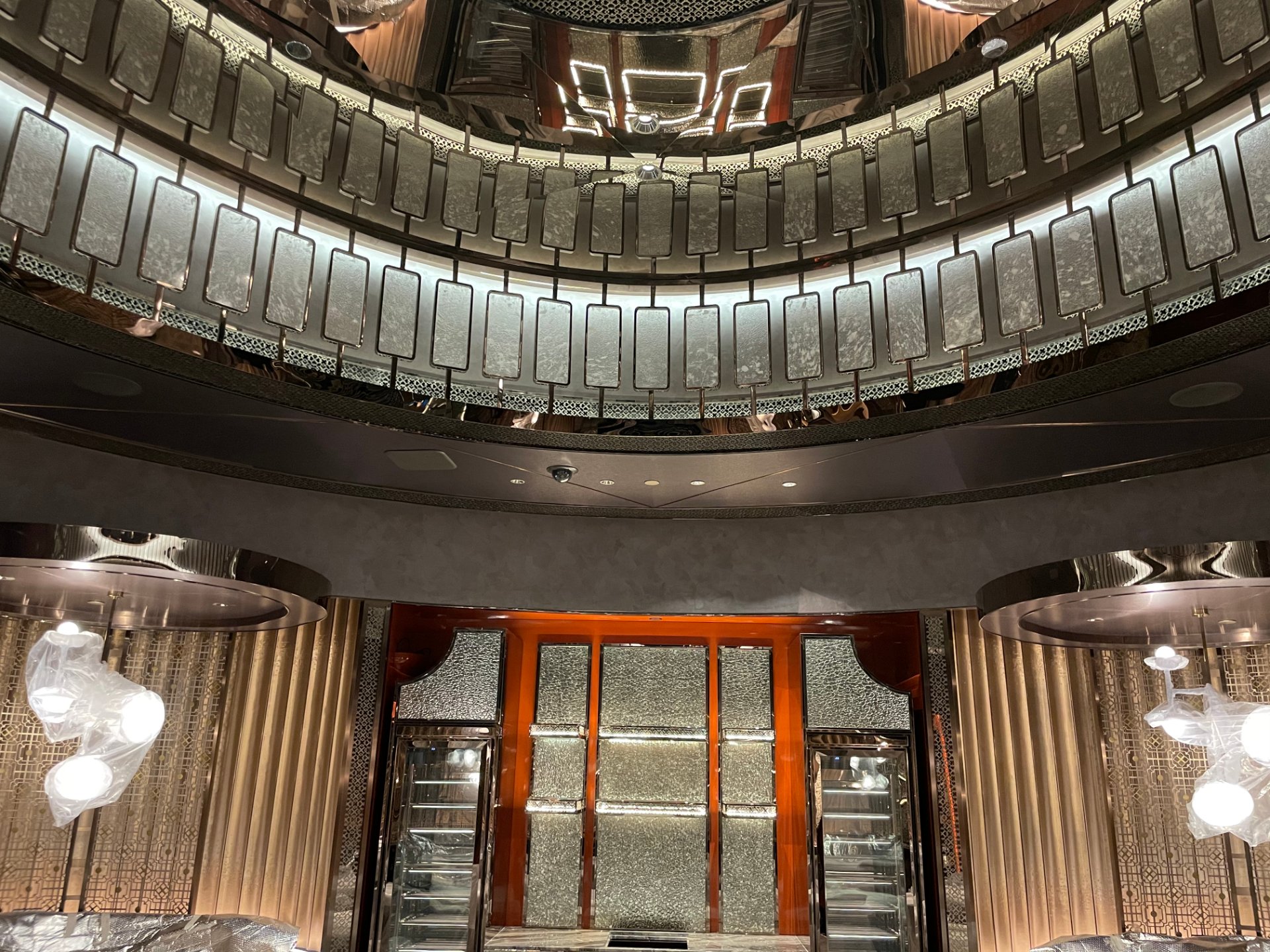
We have delivered custom metalwork across the Macau integrated resort corridor for years — gaming floor features, lobby ceilings, VIP area metalwork, restaurant and bar installations, and retail-grade fixtures — for properties including MGM Cotai, Galaxy Macau, The Londoner Macao, Morpheus at City of Dreams, Grand Lisboa Palace, The Parisian and The Venetian, The Karl Lagerfeld Hotel, The 13 Hotel, and DFS beauty counters at Four Seasons Macao. This article sets out what makes this sector different and what a contractor should require from a metalwork supplier before awarding the package.
What makes casino metalwork different
1. Durability is non-negotiable, and it is mostly about hands. Gaming floors and public areas run all night, every night. Surfaces that look spectacular on opening day must survive continuous contact: fingerprinting on polished stainless and brass is the visible enemy, which is why anti-fingerprint coatings and brushed or vibration finishes dominate high-touch zones. Where mirror PVD is specified for impact, the surrounding detail should concentrate wear on replaceable or protectable elements. Colour consistency across production batches is a specification issue — for the mechanics of this, see our article on controlling PVD colour variation across batches.
2. Approval loops are deep and slow; fabrication must be fast. Casino packages typically pass through operator brand standards, designer intent, and project manager cost control, often sequentially. Every finish needs a physical sample, and mock-ups are reviewed under actual lighting conditions, not office light. The supplier's job is to absorb these loops with disciplined sample management and then execute production on a schedule that usually cannot move, because the installation window is tied to gaming floor shutdowns and event calendars.
3. Installation happens inside a live machine. Metalwork rarely arrives at an empty building. Access is through back-of-house routes with height and width limits, elevators have size ceilings, and work happens in phases beside operating areas — sometimes overnight, with the area returned pristine by morning. This is why logistics engineering matters as much as fabrication: components designed in factory-assembly modules, packed in reverse installation order, and crated for narrow-route handling. Our articles on packing large metalwork for overseas projects and designing large screens against distortion cover the engineering behind this.
4. Geometry and lighting expose everything. Casino interiors lean on curved forms, layered screens and polished surfaces under dense, focused lighting. Curved work and large-format panels magnify every tolerance error, and mirror finishes broadcast every dent. This is the environment where shop drawing rigour, 3D installation simulation and factory trial assembly stop being nice-to-haves — our article on engineering coordination for curved cladding walks through that process on a 2,700 m² brass package.
What the Macau track record looks like in scope terms
The published project pages give the honest picture of what this experience covers:
- Gaming floor and VIP metalwork — VIP junket lobby metalwork at MGM Cotai and gaming area metalwork at The Londoner Macao.
- Large-scale lobby and public-area features — the Central Spine feature metalwork at The Londoner, Pearl Lobby at Galaxy Macau, and the Grand Lisboa Palace and Morpheus packages.
- Food and beverage interiors — Café de Paris at Galaxy Macau, Churchchills Table at The Londoner, and restaurant metalwork at The Venetian.
- Hotel and boutique-grade detail — The Karl Lagerfeld Hotel, The 13 Hotel, Raffles amenities at Galaxy, and Chanel boutique at Taipei 101 for the retail-design standard.
The common thread: luxury finish expectations, engineered structures behind decorative surfaces, and delivery inside controlled shutdown windows.
The process that survives this environment
Across these projects, four disciplines separate suppliers who deliver from suppliers who cause problems:
- Sample discipline. One approved finish library — physical, labelled, dated — that production batches are matched against, with colour tolerance agreed in writing before bulk finishing starts.
- Shop drawing rigour. A coded drawing set tying every component to its position, its carton and its installation sequence. For a look at how shop drawings are actually developed, see how metal shop drawings move from model to workshop.
- Factory trial assembly. Interfaces proven on the workshop floor — especially where metalwork meets glass, lighting and joinery — before anything ships. The economic case is made in detail in our article on factory pre-assembly of architectural metal components.
- Shutdown-aware logistics. Packing planned backwards from the installation sequence, with protected finished surfaces and modular handling sized to back-of-house routes.
What to ask a supplier before awarding a casino package
Three questions cut through sales language. First: which casino or integrated resort packages have you delivered, and can you show the project scope, finishes and constraints you worked within? Second: how do you control finish colour and fingerprint resistance across production batches — what is the sample and approval mechanism? Third: how is the package engineered for the shutdown window — what gets trial-fitted, how is it packed, and in what order does it arrive?
Suppliers who have genuinely done this work answer with specifics: project names, coding systems, sample libraries and packing plans.
If you are preparing a casino or integrated resort metalwork package — gaming floor features, lobby installations, VIP area metalwork or F&B interiors — send us your drawings for a technical review and quotation.