Guide
Black, Gold and Precision: Manufacturing Decorative Metalwork for Luxury Hospitality Interiors
Four finishes, one design language: how mirror black PVD, brushed black PVD, brushed gold PVD and paint are coordinated on a luxury restaurant metalwork package.
When metal becomes part of the architecture
In luxury hospitality interiors, decorative metalwork is rarely an isolated detail. It influences how spaces reflect light, how architectural features are perceived, and how individual materials come together into a coherent design.
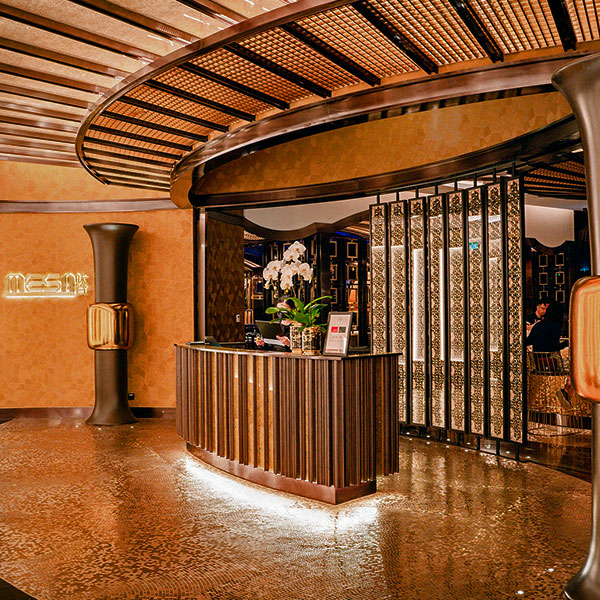
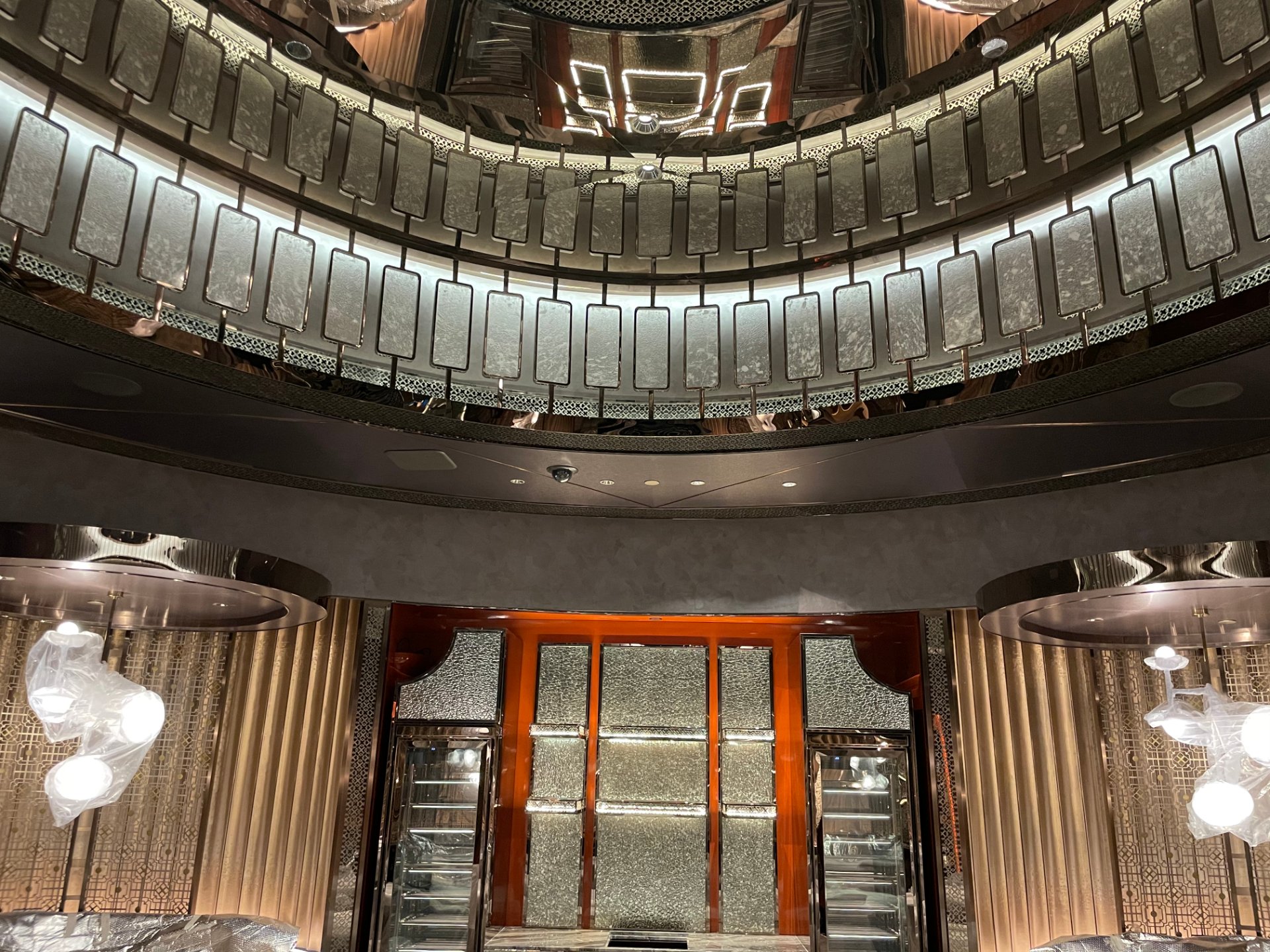
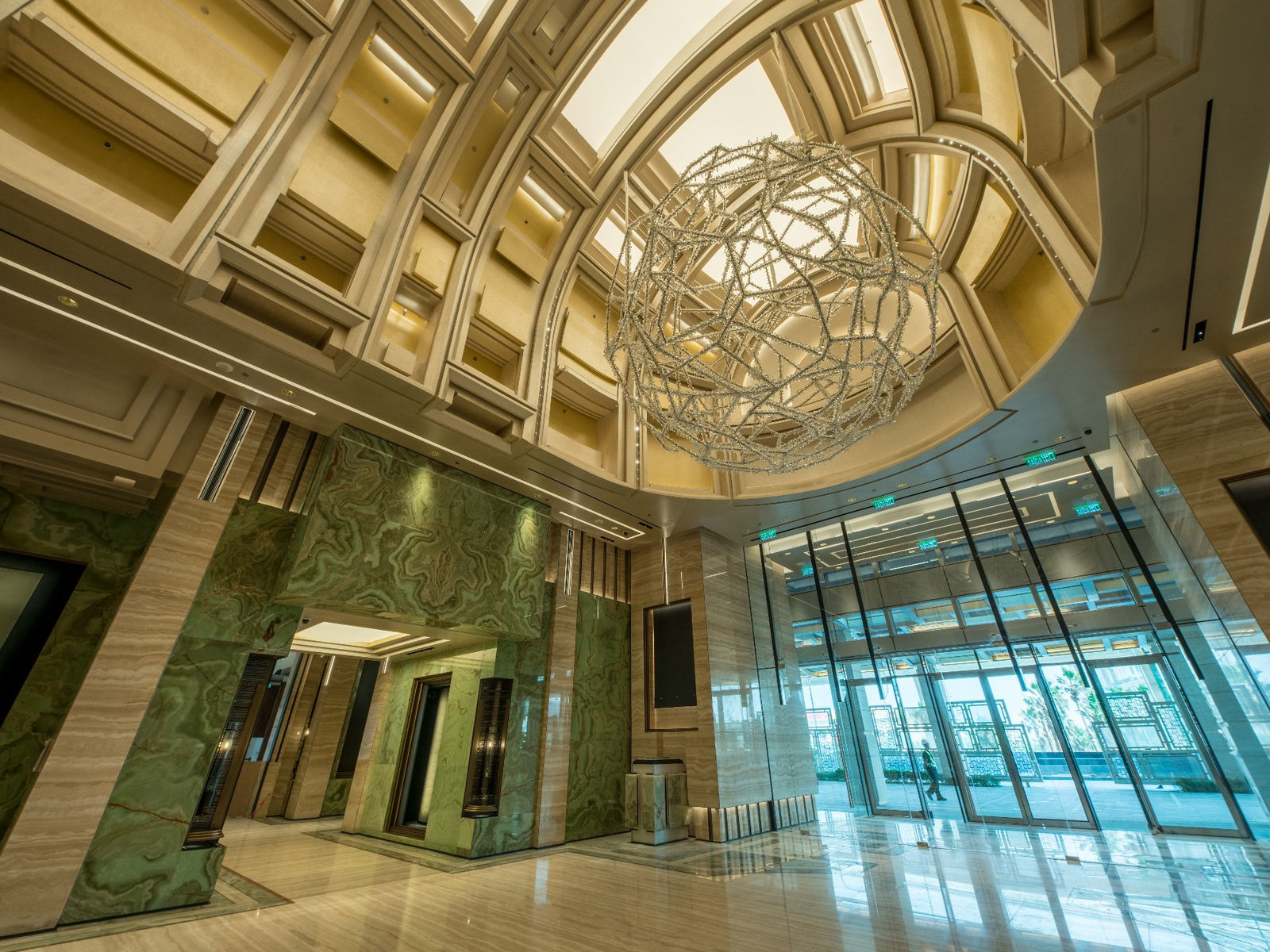
MESA restaurant at THE KARL LAGERFELD, Grand Lisboa Palace Resort Macau, is a clear example. The restaurant's black-and-gold design language runs across ceilings, screens, display structures and wall surfaces, and KingDeco manufactured the decorative stainless steel package behind it — engaged through the interior fit-out contractor, with interior design credited to Karl Lagerfeld, Paris and B+H Architects, Hong Kong.
Four finishes, one design language
The package was manufactured in 304 stainless steel with four coordinated finishes:
- Mirror black PVD creates sharp, high-contrast reflections and accentuates the geometry around it — used where the design wants the surface to participate in the lighting.
- Brushed black PVD offers a quieter expression. Its directional texture softens reflections and hides handling far better than mirror, which makes it the practical choice for large-format screens and wall fields.
- Brushed gold PVD introduces warmth and contrast. Against black, it defines the design's accent lines: frame edges, inserts, trim.
- Black painted finish provides another register where specified, with its own reflectivity and edge behaviour.
Each finish is straightforward to produce individually. The difficulty is producing them together, on components that sit side by side, so that the gold-to-black boundaries land exactly on the design lines, the brushed directions follow a deliberate logic across adjacent panels, and the colour of each PVD batch matches the approved samples.
Why fabrication quality shows through the finish
A decorative finish does not hide the metal below it — it magnifies it. Visible welds, sanding scratches, waviness in formed surfaces and inconsistent grinding all become more apparent after PVD coating, especially on mirror-black surfaces where reflection acts like a highlighter.
This is why fabrication and finishing cannot be treated as separate operations handed to different workshops. The surface has to be prepared to finishing standard before it is coated: welds dressed, grain established, edges broken consistently. On the MESA package, polishing and weld inspection sat between forming and finishing in the workflow precisely for this reason. For a fuller description of how the whole package was built, see the project case study.
Geometry and reflection working together
The three-dimensional corridor modules at THE KARL LAGERFELD show how form and finish amplify each other. Repeated pyramid-form modules in black create a field of changing highlights; the same field in flat black paint would read as texture, and in mirror it reads as architecture. The choice of which surfaces carry mirror versus brushed finish determines whether a wall reads calm or animated.
Getting that result at installation scale is a manufacturing task: consistent module geometry, controlled finish boundaries, and colour-checked batches so that the reflection behaviour does not drift between production runs. Colour matching across PVD batches is a discipline of its own — see controlling PVD colour variation across batches.
Practical notes for designers
A few specification habits make multi-finish packages manufacturable without losing design intent:
- Approve physical samples, not swatch cards — the sample is the colour standard that production batches are checked against.
- Define where each finish stops — the boundary between black and gold is a design line; draw it on the drawing, not on site.
- Assign brushed direction — vertical, horizontal or along the viewing axis; inconsistent grain across adjacent panels is immediately visible.
- Name the substrate and the coating separately — \"304 stainless steel, mirror black PVD\" specifies both the metal and the finish; \"black metal\" specifies neither.
Manufacturing for design-led interiors
For architects and interior designers, the value of an experienced manufacturing partner is the ability to hold multi-finish consistency across a full package — ceilings, screens, displays and wall features — while the design intent stays intact. The MESA interior at THE KARL LAGERFELD demonstrates what that discipline produces.
If you are specifying decorative metal finishes for a hospitality interior and want a view on manufacturability, send us your drawings for a technical review and quotation.