Sep 19, 2026Guide
How Large Decorative Metalwork Is Packed for Overseas Projects
Export packing for architectural metal: surface protection, crating, sequencing and why packing is part of the engineering.
Packing is engineered, not an afterthought
A polished wall panel or a hand-forged sculpture survives a container journey because someone designed the protection: how forces travel through the crate, where the metal must not touch wood, and how the pack opens on site without a knife near a finished face.
Surface protection in layers
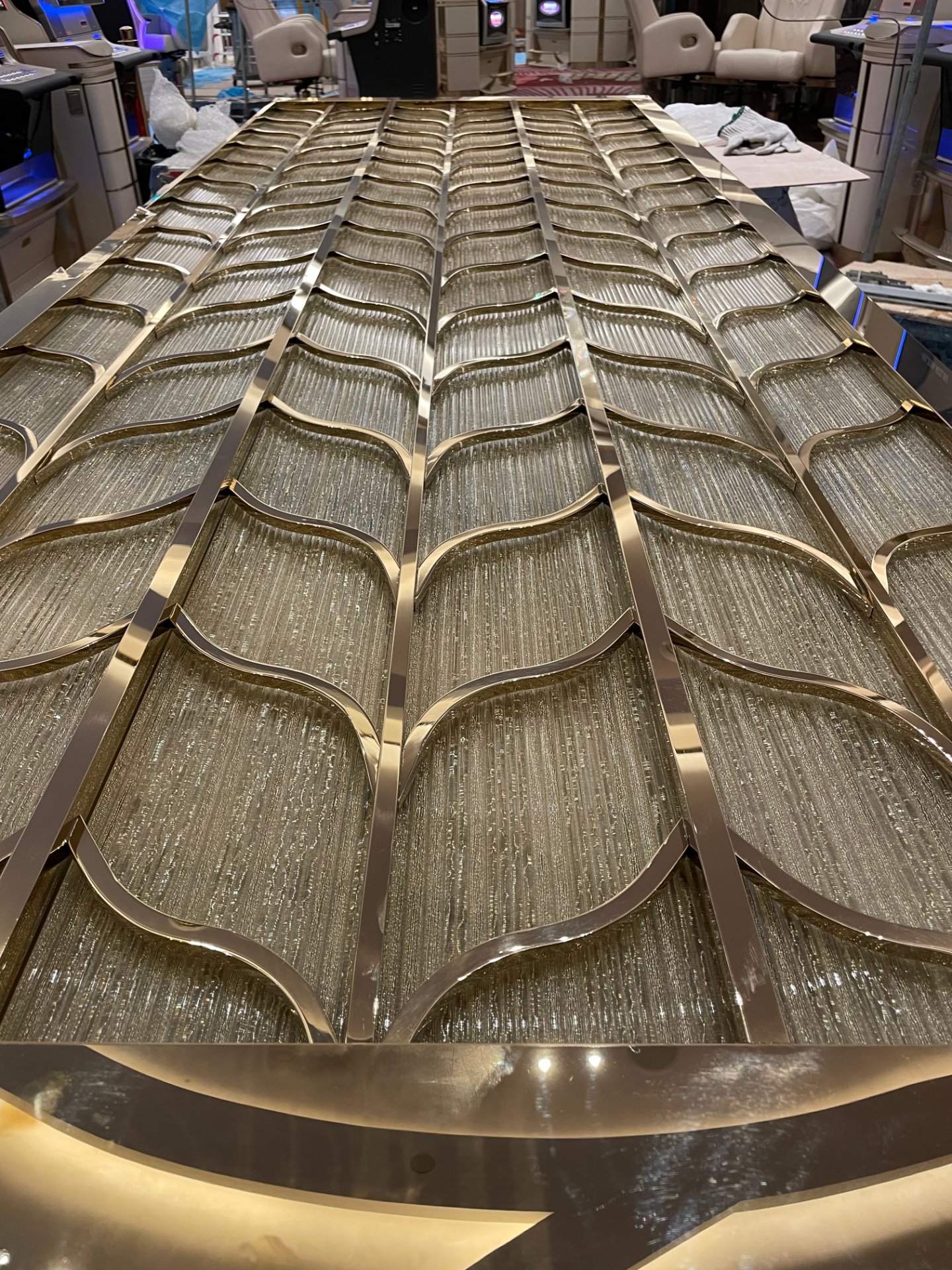
Finished faces get peel film applied before anything else touches them; edges get foam or board; then interleaving, then the crate. Film stays on through installation until handover. Hairline and PVD surfaces are forgiving; mirror surfaces forgive nothing — their packs are heavier and their handling notes stricter.
Crating for the journey and the site
Crates are designed for the stack: container forces, forklift points, and the weight of what sits above. Large screens and panels travel in purpose-built frames or crates, standing at the angle that keeps them flat. Components are numbered per position so the site installs in sequence without a sorting exercise.
Consolidation and coordination
For overseas projects, metalwork usually shares a container with the rest of the package — glass, mesh, the pieces that must arrive together. Consolidation means planning which crates load where, what must not sit beneath what, and the documents that let customs move quickly. A packing list that matches the crate markings is part of the deliverable.
Shipping a package overseas?
KingDeco packs and consolidates architectural metalwork for projects worldwide. Send your drawings and destination for a review.