Guide
Factory Pre-Assembly of Architectural Metal Components: How 3,000+ Parts Reach Site Ready
Factory pre-assembly moves installation risk off site. What trial-fitting 3,000+ components taught us about tolerances, coding and packing for overseas projects.
The most expensive place to discover a mistake is on site
For architectural metalwork, the cost of correcting a problem rises steeply with distance from the workshop. In the factory, a misaligned fixing is a hour of rework. On site, the same misalignment can mean scaffolding stays up another week, a finished surface gets damaged while being corrected, and a trade interface slips into another contractor's programme. When the site is in another country, add freight and customs to every correction.
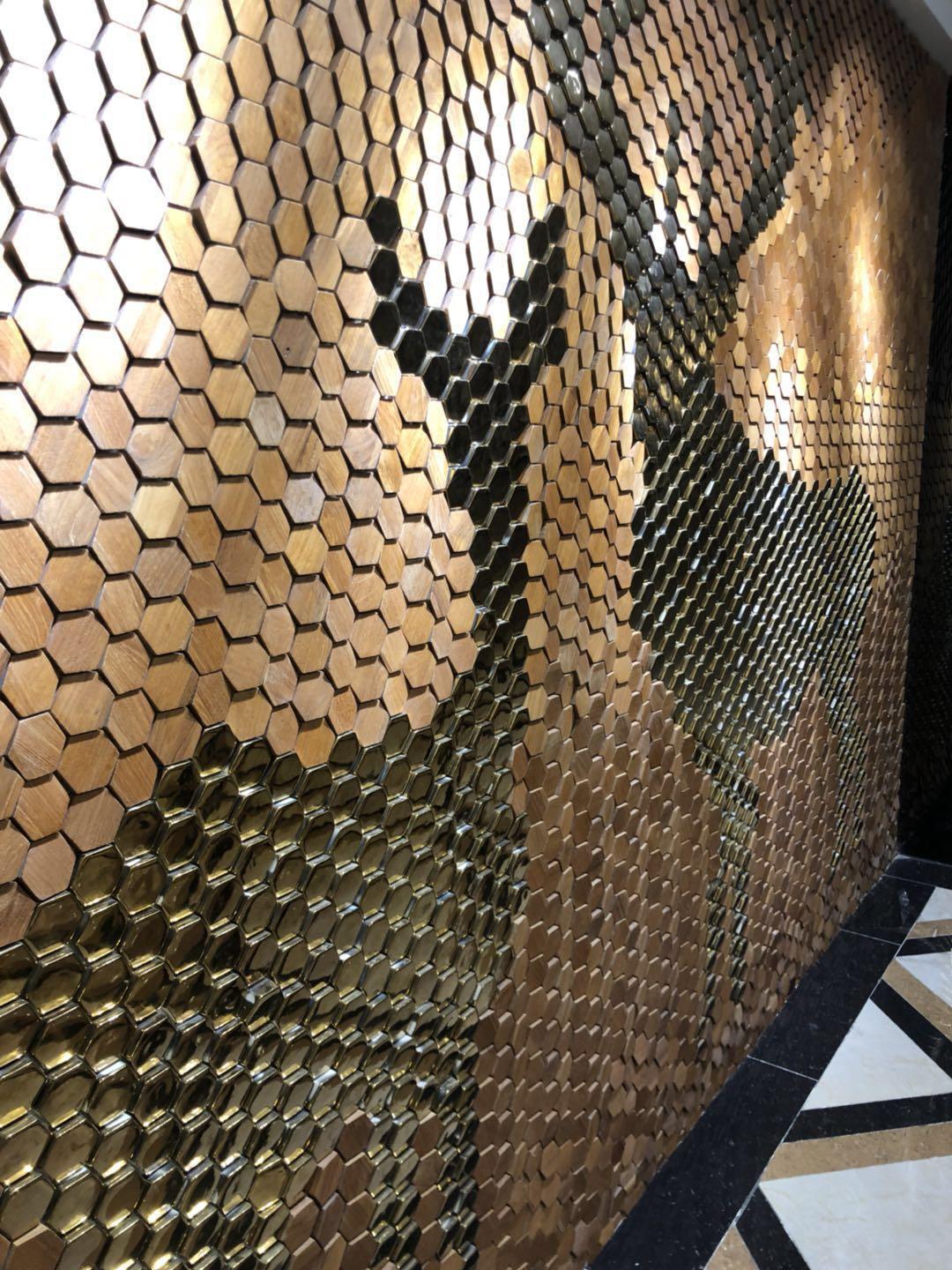
Factory pre-assembly is the discipline of finding those problems while they are still cheap. This article explains what it involves in practice, using a real reference point: a 2,700 m² interior brass cladding package for the Australian War Memorial, comprising more than 3,000 fabricated components, which were trial-fitted in the factory before shipping to site.
What pre-assembly actually means for bespoke metalwork
Pre-assembly is not a single activity; it is a set of verification steps that scale with the project's complexity:
- Sub-assembly builds. Individual assemblies — a column surround in four curved segments, a framed screen, a counter body — are built complete in the workshop, including fixings, not just dry-laid.
- Interface trials. Where metalwork meets other materials (glass, stone, lighting, joinery), the mating condition is reproduced with the actual mating part or a certified sample, so rebate sizes and clearances are proven rather than assumed.
- Representative run assembly. For large walls or ceilings made of hundreds of similar panels, full assembly of every panel is unnecessary; what matters is assembling representative runs — the tightest curve, the largest panel, the corner condition, the first and last panel of a sequence.
- Trial fit of the full set where scale permits. On the War Memorial package, components were trial-fitted before dispatch, giving the project team physical evidence that the coded parts assembled as the drawings promised.
What trial fitting catches that drawings cannot
Every experienced installer knows the categories. Trial assembly catches them while the fix is a workshop hour:
- Accumulated tolerance. Each panel may be within its own tolerance and the run still drift, because tolerances accumulate across connections. Assembly reveals the drift while panels can still be re-adjusted or re-shimmed.
- Fixing interference. A fixing that works on the drawing can collide with a stiffener, a weld seam or an adjacent panel's bracket in reality.
- Reveal and joint consistency. Curved and formed panels can twist slightly during forming or welding; assembly exposes joints that open or close unevenly, while re-alignment is still possible.
- Finish continuity. Polishing direction, grain alignment and PVD batch matching are judged far more reliably on an assembled run than on loose panels. Where colour consistency across batches matters, matched panels are grouped at this stage — see our article on controlling PVD colour variation across batches.
- Sequencing errors. Assembly rehearses the order of installation, which occasionally reveals that a component can only be installed after a neighbour that was scheduled later.
Coding makes pre-assembly scale
Trial fitting thousands of components only works if every part is unambiguously identified. The War Memorial package used a five-point coding system covering more than 2,000 unique part codes, linking each component to its drawing, its position and its carton. Coding turns pre-assembly from a heroic effort into a repeatable process: the factory can prove every code was made, fitted and packed, and the site crew installs by code instead of by guesswork. On a curved surface, where near-identical panels may only fit in one orientation, that proof is what prevents a forced fit.
Pre-assembly changes the packing plan
A verified, coded set makes intelligent packing possible. Components are packed in reverse order of installation, so the first parts needed on site are accessible without unpacking everything; verified assemblies can be partially pre-assembled into transport modules where freight economics allow; and every finished surface travels protected. For a detailed treatment, see our article on packing large metalwork for overseas projects.
What pre-assembly costs — and what it saves
Honest accounting matters. Pre-assembly consumes factory floor space, handling time and labour that a "fabricate and ship" workflow skips. On simple, forgiving work — flat panels with generous reveal tolerances — that extra cost may not be justified, and a responsible fabricator should say so.
The economics invert when any of these is true: the components are numerous (hundreds or thousands of parts), the geometry is curved or dimension-critical, the interfaces involve other trades, finishes are direction- or batch-sensitive, or the site is overseas. In those conditions, one avoided site correction typically pays for the entire trial-assembly effort. The War Memorial package concentrated all five conditions, which is why full trial fit was the correct call there.
The indirect saving is harder to quantify but larger: a pre-assembled package installs faster, holds programme, and preserves the client's confidence. Installers who find that bolt holes line up treat the remaining installation differently — carefully — and that attitude is worth real money on a complex fit-out.
A practical standard to hold your supplier to
If you are procuring custom metalwork for a complex interior, ask three questions: Which assemblies will be trial-fitted before shipment, and can you see evidence? How are components coded against drawings and cartons? How does the packing plan relate to the site installation sequence? A fabrication partner who has genuinely done the work will answer with specifics, not assurances.
If you are evaluating a metalwork package and want a technical review of where pre-assembly and coding should apply, send us your drawings for a technical review and quotation.