Guide
Solid Brass vs Brass-Clad Stainless Steel: What to Specify and When
Solid brass and brass-clad stainless steel look similar but behave differently. A practical comparison of cost, weight, fabrication and where each option makes sense.
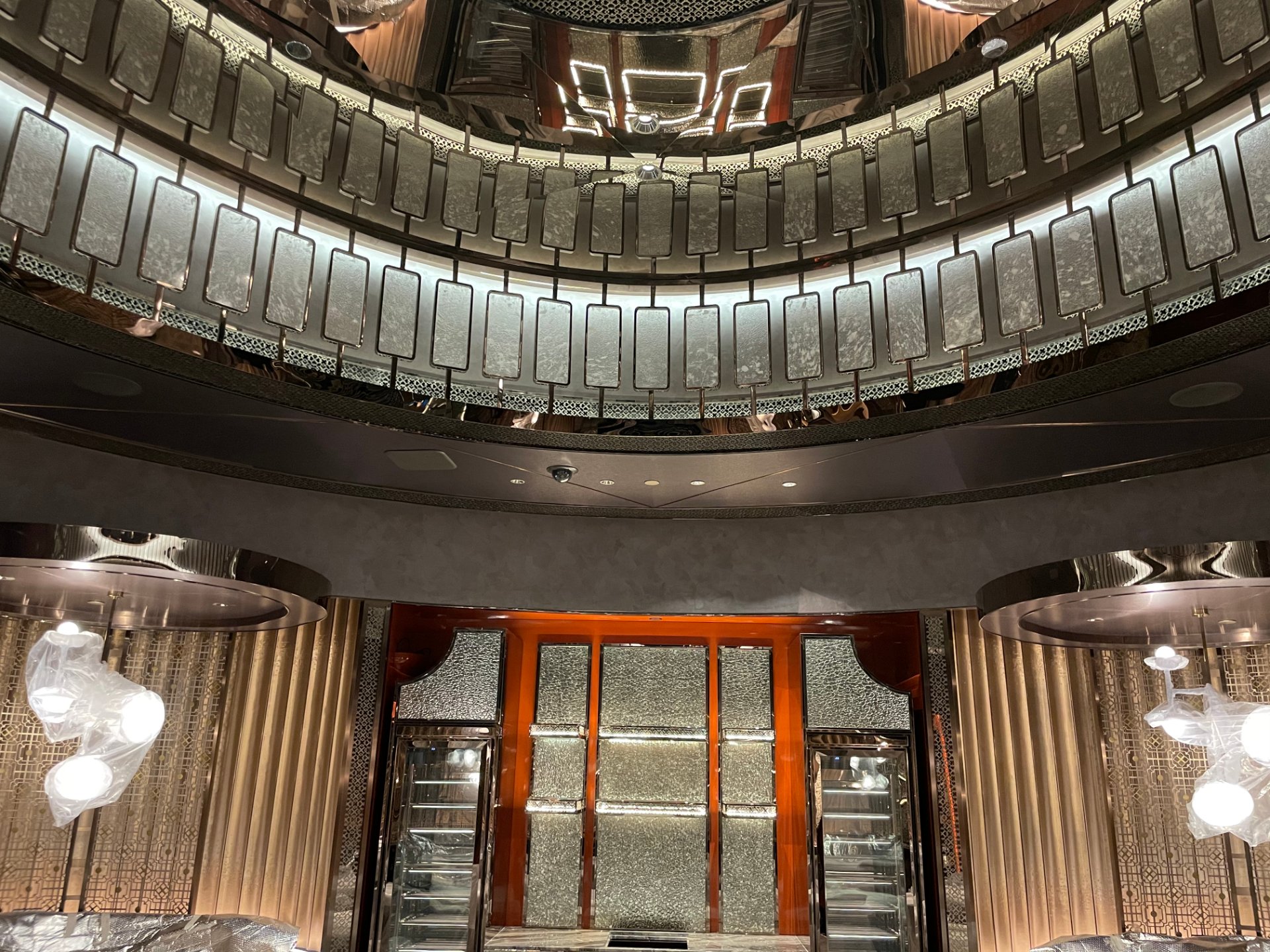
The brass look, two very different ways
Brass reads as luxury: warm colour, depth under light, and a material history that designers trust. But \"brass\" on a specification sheet can mean at least two quite different build-ups — solid brass, and stainless steel with a brass surface layer (often called brass-clad or brass-finish stainless). They can look nearly identical on day one. They differ in cost structure, weight, fabrication behaviour and how they age, and choosing wrongly is expensive to undo.
This article is the practical comparison we walk through with architects and fit-out contractors when a drawing says \"brass\" without saying which brass.
Solid brass: the reference material
Solid brass is a copper-zinc alloy through the full section. In architectural work the common families are free-machining and forming grades (around 58–63% copper, the H62/C280 class) and higher-copper grades for richer colour. What matters for specification decisions:
- Colour depth and patina. The colour is the material, not a layer on it. Solid brass can be left to patina, waxed to hold a warm tone, or lacquered to freeze it. Edges and chamfers show the same colour as faces, which matters on exposed profiles and handrails.
- Workability. Brass forms, bends, engraves and polishes beautifully, which is why detailed profiles, embossed panels and hammered textures are usually done in solid material.
- Softness. Brass is softer than stainless steel. On high-touch surfaces it develops a living finish; in service that is either the intended charm or a maintenance expectation that the client must accept.
- Cost follows the metal. Brass is a copper alloy, so material cost tracks the copper market. For large-area applications, the metal itself becomes the dominant cost driver, and thickness multiplies it.
- Weight. At roughly 8.4–8.5 g/cm³, solid brass is heavy. Large solid panels need heavier substructures, and weight matters for doors, ceilings and anything suspended.
Brass-clad stainless steel: the engineered alternative
Brass-clad stainless steel is a stainless core with a bonded brass surface layer. The stainless core provides stiffness, strength and corrosion resistance; the brass layer provides the appearance. Fabricators can weld and form the core for structure while the visible surfaces carry brass.
The practical consequences:
- Cost structure. The brass is a layer, not the section, so cost decouples from copper price and panel thickness. For large-format cladding, this is usually the decisive advantage — large areas at a fraction of the solid-brass material cost.
- Flatness and rigidity. The stainless core holds flatness on large panels far better than thin solid brass sheet, which tends to oil-can. Big feature walls in brass-clad stainless stay truer over time.
- Weight. Substantially lighter than solid brass at equal panel size, which reduces substructure loads and makes handling easier on ceilings and elevated walls.
- Edges and welds are the watch-points. The brass is a layer, so edge returns, welded corners and dressed welds need deliberate detailing — folded wraps, capped edges or matched inserts — so no cut edge betrays the build-up. This is a fabrication quality question; a capable workshop solves it, but it must be detailed, not discovered on site.
- Finish consistency. Mirror and hairline finishes on brass-clad stainless behave like stainless finishing, and anti-fingerprint coatings can be applied exactly as on stainless — a practical advantage in high-traffic interiors.
Side-by-side comparison
Criterion | Solid brass | Brass-clad stainless steel |
|---|---|---|
Colour through section | Yes — edges and wear points keep colour | No — layer; edges/welds need detailing |
Patina / living finish | Authentic, ages naturally | Surface layer behaviour depends on build-up |
Large-panel flatness | Prone to oil-canning in thin sheet | Excellent, stainless core stiffness |
Weight | High (~8.4 g/cm³) | Much lighter |
Material cost per m² | High, tracks copper market | Substantially lower on large areas |
Forming fine detail / textures | Excellent | Limited by layer and process |
High-touch profiles (handrails, trims) | Preferred | Edge wear risk if layer thin |
Anti-fingerprint coating | Possible, formulation-sensitive | Standard, as on stainless |
Where each option wins
Specify solid brass when the brass is touched, profiled or detailed: handrails, door furniture, trim profiles, signage letters, embossed or hammered feature pieces, heritage or restoration contexts, and anywhere a genuine patina is part of the design story. Solid brass is also the right answer where edges and wear points must stay brass — the places where a cladding layer would eventually reveal itself.
Specify brass-clad stainless steel when the brass is primarily a surface: large feature walls and ceilings, column cladding, reception desks and wall panelling where panel size and flatness dominate, budgets are area-driven, or the detail sits above reach. On mixed projects — and most are — the sensible build-up is hybrid: solid brass on details people touch, brass-clad stainless on the planes people photograph. This combination, done with a single finishing standard so the two materials read as one, is how most of the hotel and lobby projects in our project portfolio are built. For a deeper look at one large brass package, see our article on custom brass wall cladding for luxury hotels.
Specification language that prevents surprises
Whichever option you choose, write the specification so the workshop builds what you imagined:
- Name the build-up explicitly: \"solid brass, H62/C280 class\" or \"brass-clad stainless steel, brass layer on visible faces, edges dressed with folded brass return\" — never just \"brass\".
- State the finish with a physical approved sample: mirror, hairline, vibration, hammered, plus lacquer or anti-fingerprint coating where wanted.
- Define colour acceptance against samples, and for large orders agree how colour will be matched across batches — see our article on PVD colour variation control for the same discipline applied to coloured stainless.
- Detail the edges: where a clad build-up meets corners, returns and reveals, the edge treatment should be a drawing note, not a site improvisation.
- Ask for a mock-up panel of the largest, most curved or most exposed condition before bulk production.
The decision in one sentence
If the design needs brass as a material — touched, formed, ageing — solid brass earns its cost; if it needs brass as a surface over large areas, brass-clad stainless steel delivers the same read with better flatness, less weight and a friendlier budget, provided the edges are detailed by a workshop that knows how.
If you have a drawing that says \"brass\" and want a view on the most sensible build-up and price for your project, send us your drawings for a technical review and quotation.