Guide
Anti-Fingerprint Coating on Mirror Stainless: A Designer's Specification Guide
Mirror stainless shows every fingerprint. How AF coating works, where it earns its cost, and the six specification points to put on the drawing before production.
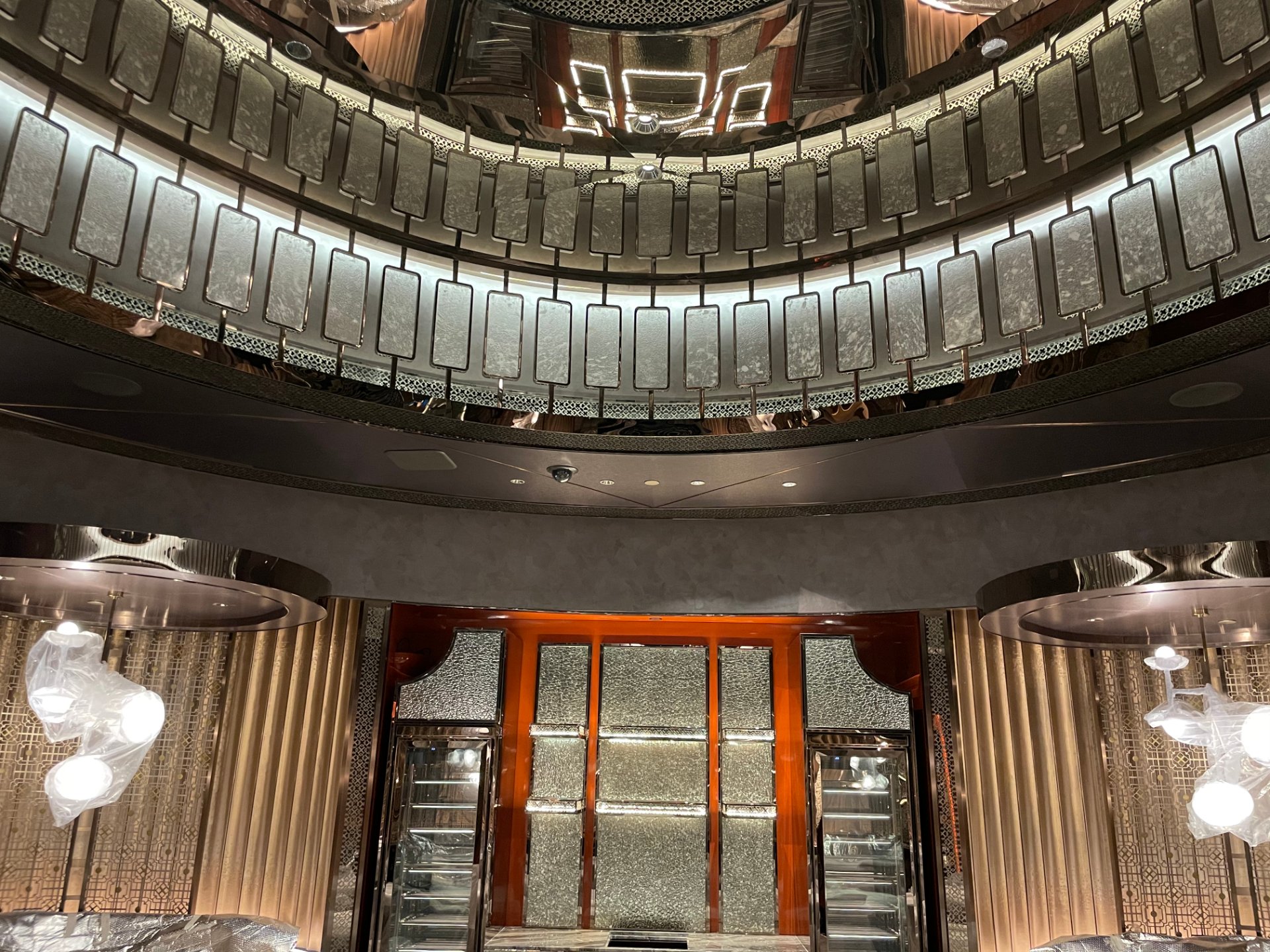
Mirror stainless steel is one of the most dramatic materials in an interior — and one of the most demanding to live with. Every hand that touches a lift lobby panel, a reception counter edge, a door pull or a handrail leaves a mark that ordinary cleaning does not fully remove. Within weeks of handover, an uncoated mirror surface in a high-touch location starts to look tired, and the facility team starts a losing battle with microfibre cloths.
Anti-fingerprint (AF) coating is the standard industry answer. But it is also one of the most loosely specified items in architectural metalwork packages: it appears on drawings as three words — \"anti-fingerprint finish\" — with no performance requirement, no scope, and no agreed way to verify it. This guide sets out what AF coating actually is, where it earns its cost, and what a complete specification should contain.
What the coating actually does
An AF coating is a very thin oleophobic (oil-repelling) layer applied over the finished stainless surface — over the mirror polish, the PVD colour, or the hairline texture. It changes the surface energy of the metal so that skin oils do not adhere and spread. Water-based and alcohol-based cleaning agents also stop leaving the smear patterns that plague raw polished steel.
Three practical consequences follow from how the coating works:
- It is transparent but not invisible. On mirror surfaces a slight haze or tint difference can exist between coated and uncoated areas. This is why AF should be specified across a whole component, never applied to patch a localised fingerprint problem on a partly finished surface.
- It is a surface layer, and it has a service life. Abrasive cleaning, scouring pads, or acidic descaling chemicals will degrade or strip it. In a well-run hotel the coating performs for years; in a building cleaned by the cheapest available contractor, it can be damaged within months — no fault of the metalwork.
- It slightly reduces the \"raw metal\" feel. Some designers object that coated mirror steel feels more like glass. This is inherent to the product. Clients accept it instantly the first time they drag a finger across a coated and an uncoated sample side by side.
Where AF coating is worth the money
Not every surface in a metal package needs it. Coating adds cost and a process step, so the specification should be selective:
Essential — always specify: door pulls and push plates, handrails and balustrade caps, reception and concierge counter fronts and edges, lift car panels and button surrounds, turnstiles and bollards, any panel adjacent to a circulation route at hand height (roughly 900–1,800 mm above floor).
Usually unnecessary: ceiling panels, upper wall cladding above 1.8 m, decorative screens out of reach, furniture tops in low-use residential settings, sculpture and art pieces behind protection.
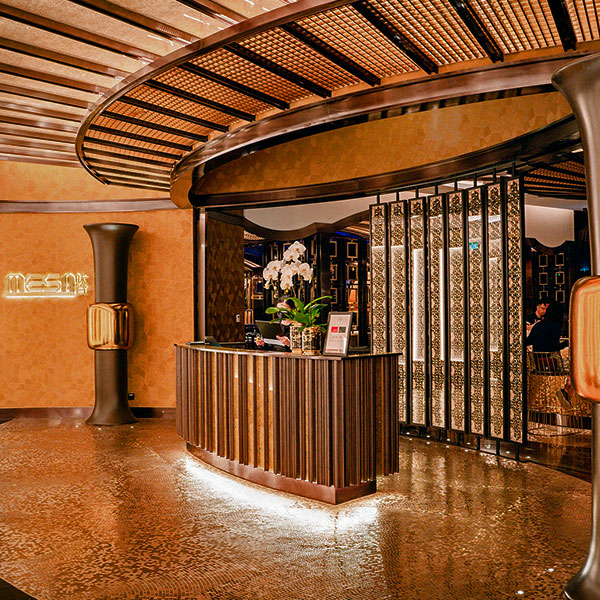
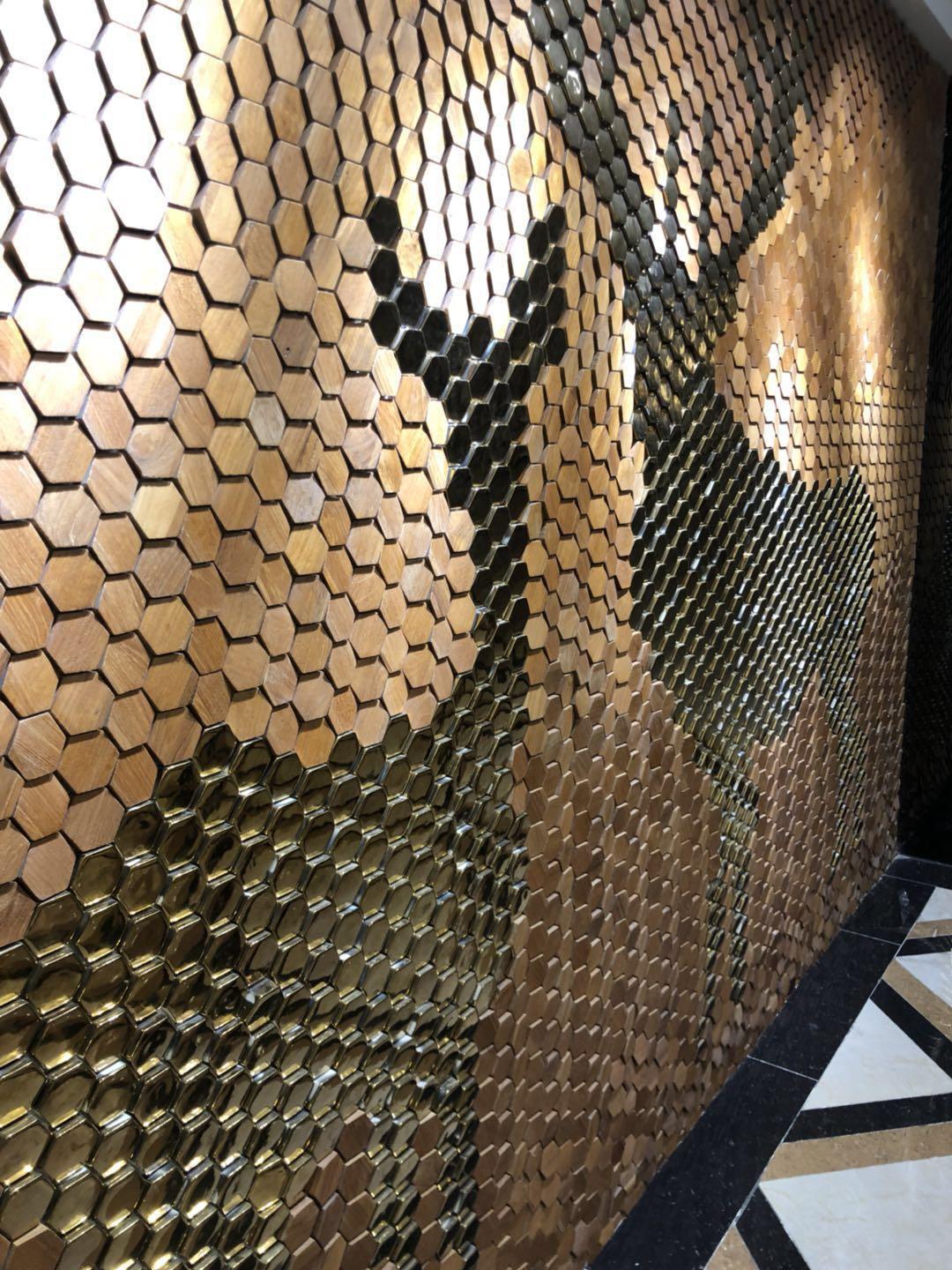
Judgement call: PVD-coloured surfaces. PVD itself is hard and reasonably fingerprint-tolerant, but on dark PVD colours (black, deep bronze) skin oils are highly visible. Most hospitality projects now specify AF over PVD as standard for anything touchable — this is standard practice on our hotel and casino packages, where black and gold PVD meet constant public contact (see, for example, our casino and integrated resort metalwork overview).
The specification checklist
Put these six points on the drawing or in the finish schedule:
- Scope by component, not by a global note. List which items receive AF coating and which do not. A single \"all stainless to be anti-fingerprint\" note either inflates cost or gets quietly ignored.
- Substrate and finish sequence. State that AF is applied as the final step over the completed finish — after polishing, after PVD, after passivation of weld areas. Re-polishing after coating (or coating before final fabrication) destroys the logic of the process.
- Coating on both faces where both faces show. Panels with visible reverse faces (screens, glass-frame reveals) should be coated both sides; single-face coating on a two-faced screen is a common and avoidable defect claim.
- Durability expectation, stated realistically. Specify resistance to routine non-abrasive cleaning (neutral detergent, isopropyl alcohol) and note explicitly that abrasive or strongly acidic/alkaline cleaners are excluded — this protects both the fabricator and the facility team, and it puts the cleaning-chemical question on the record at design stage rather than at the first defect meeting.
- Sample approval on the real build-up. AF over mirror, over hairline and over each PVD colour are different visual products. Approve a coated sample of the actual finish combination, under project lighting, before batch production. Colour and finish consistency across batches is governed by the same discipline described in controlling PVD colour variation between batches.
- Site protection. The coating reaches site cured, but protective film should stay on through installation and be removed only at practical completion — construction hand dirt, mortar splashes and adhesive tapes are harder on coated surfaces than a year of fingerprints.
Verifying it was actually applied
AF coating cannot be confirmed by looking at a clean panel — this is where vague specifications fail. Two simple field checks work:
- The marker test: a permanent marker stroke on an AF-coated surface wipes off cleanly with a dry cloth; on uncoated steel it stains. Agree this as an acceptance test in advance, and test an inconspicuous area or a kept offcut rather than a visible panel.
- The water behaviour test: water beads and runs off a coated hydrophobic surface and sheets on raw steel. Less definitive than the marker test, but immediate and non-destructive.
Keep an approved offcut from production as the reference sample for any later dispute — it costs nothing at fabrication time and settles arguments years later.
One last practical note
AF coating interacts with the whole maintenance story of a metal package. When we supply coated mirror or PVD work, we recommend the project's facility manual states the cleaning regime explicitly: soft cloths, neutral detergent or diluted alcohol, no abrasive creams, no scouring pads, no descalers. Metalwork specified and coated correctly, then cleaned correctly, will still read as new at the five-year refurbishment — which is the quiet, compounding argument for specifying AF properly in the first place.
If you are planning a metalwork package with mirror or PVD surfaces in high-touch areas, send us your drawings for a technical review and quotation — we will mark up where AF coating should apply and where it is wasted cost.